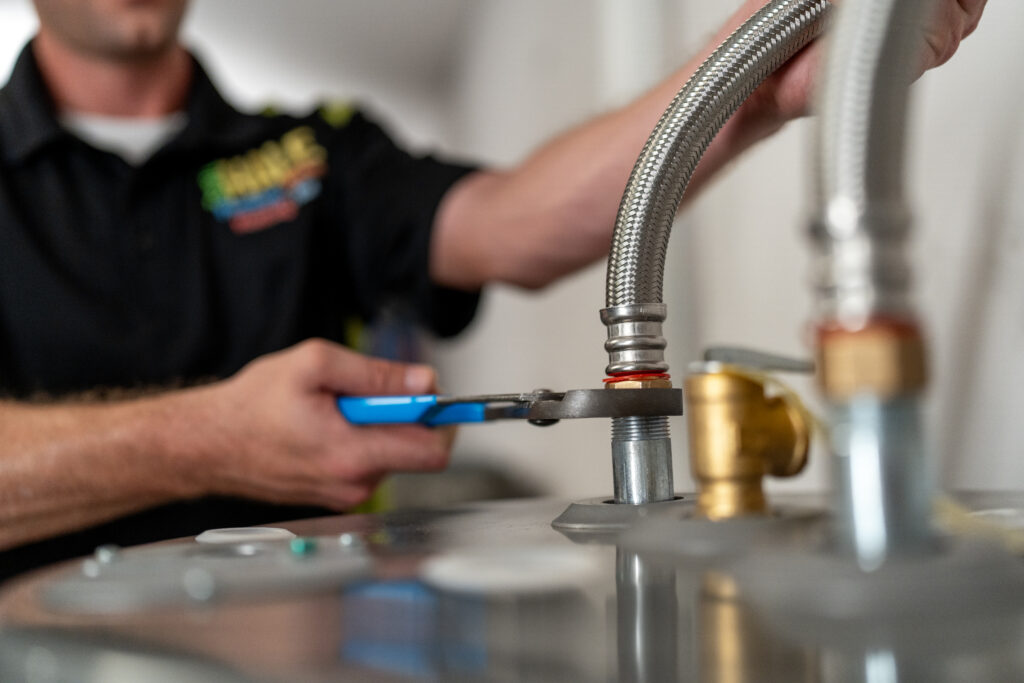
Water heater maintenance involves checking the parts that handle heat, pressure, and water flow. These steps are handled by trained plumbers to protect the system and avoid damage.
These checks help the system heat water evenly and reduce stress on internal parts.
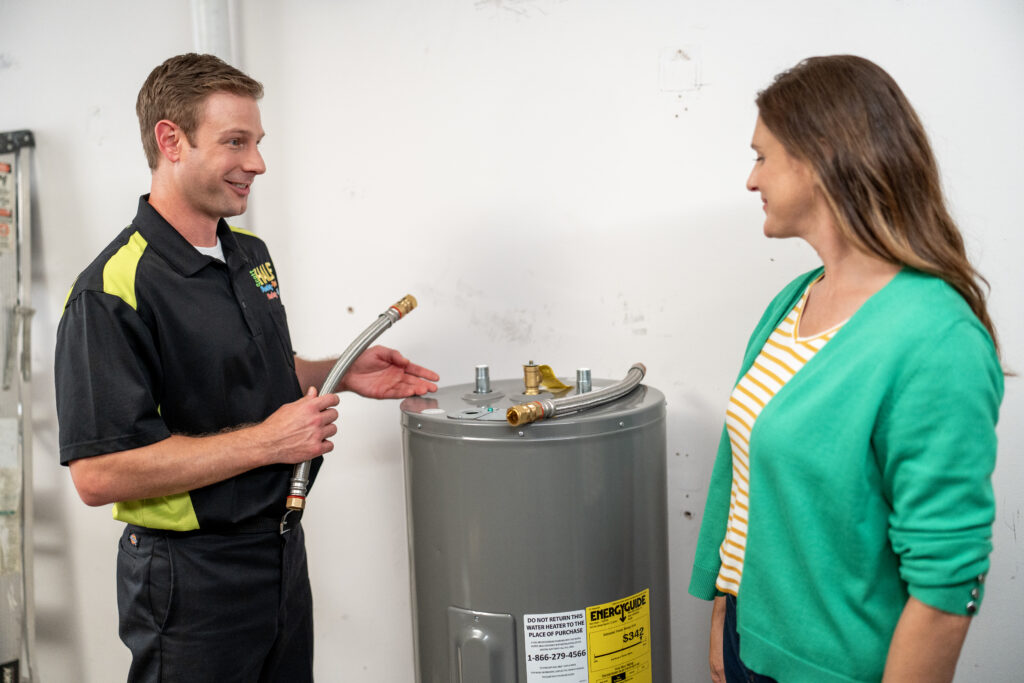
How Often Should You Schedule Maintenance
Most water heaters benefit from annual maintenance. This schedule works well for homes in Salt Lake City where mineral buildup can shorten system life.
Annual service is commonly recommended for:
- Homes with hard or mineral-heavy water
- Systems used heavily by larger households
Some tankless systems may need more frequent service depending on water quality and usage. A technician can help set the right schedule for your home.
Why Maintenance Matters in Salt Lake City
Local water conditions play a big role in how water heaters age. Minerals settle inside tanks and heat exchangers, making systems work harder to heat the same amount of water. Over time, that extra strain leads to noise, temperature issues, or leaks.
Routine maintenance helps manage those conditions and keeps systems operating closer to how they were designed to run.
Schedule Water Heater Maintenance in Salt Lake City
If it has been a while since your water heater was serviced, maintenance is a smart next step. Scott Hale serves homeowners throughout Salt Lake City and the SLC area with professional water heater maintenance and ongoing water heater service.
Contact us today to schedule service and keep your hot water system running smoothly.
Contact Scott Hale
FAQs
How do I know if my water heater needs maintenance?
Inconsistent temperatures, unusual noises, or reduced hot water supply can signal a need for service. Annual maintenance is recommended even if no problems are obvious.
Is maintenance different for tankless water heaters?
Yes. Tankless systems require descaling to remove mineral buildup. This is part of routine tankless water heater maintenance.
Can maintenance delay water heater replacement?
Regular service can extend system life and improve performance, though all systems eventually wear out.
What happens if maintenance is skipped?
Sediment buildup, reduced efficiency, and higher risk of repairs are common when maintenance is delayed.
Contact Scott Hale